EXPLORING THE LUNAR SOUTH POLE
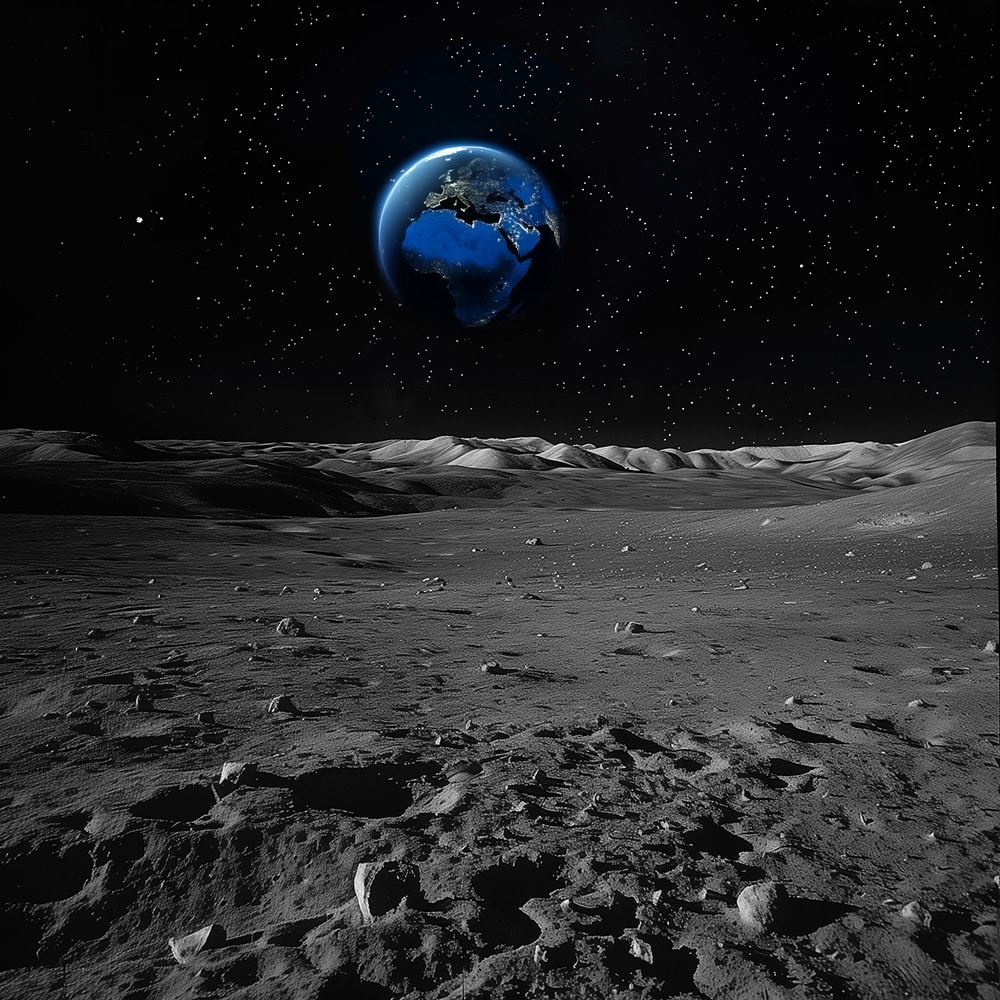
Ice hidden deep in the craters, exceptional levels of sunlight, rare-earth… The Moon’s South Pole is a land of opportunity.
WHY ARE WE GOING BACK TO THE MOON?
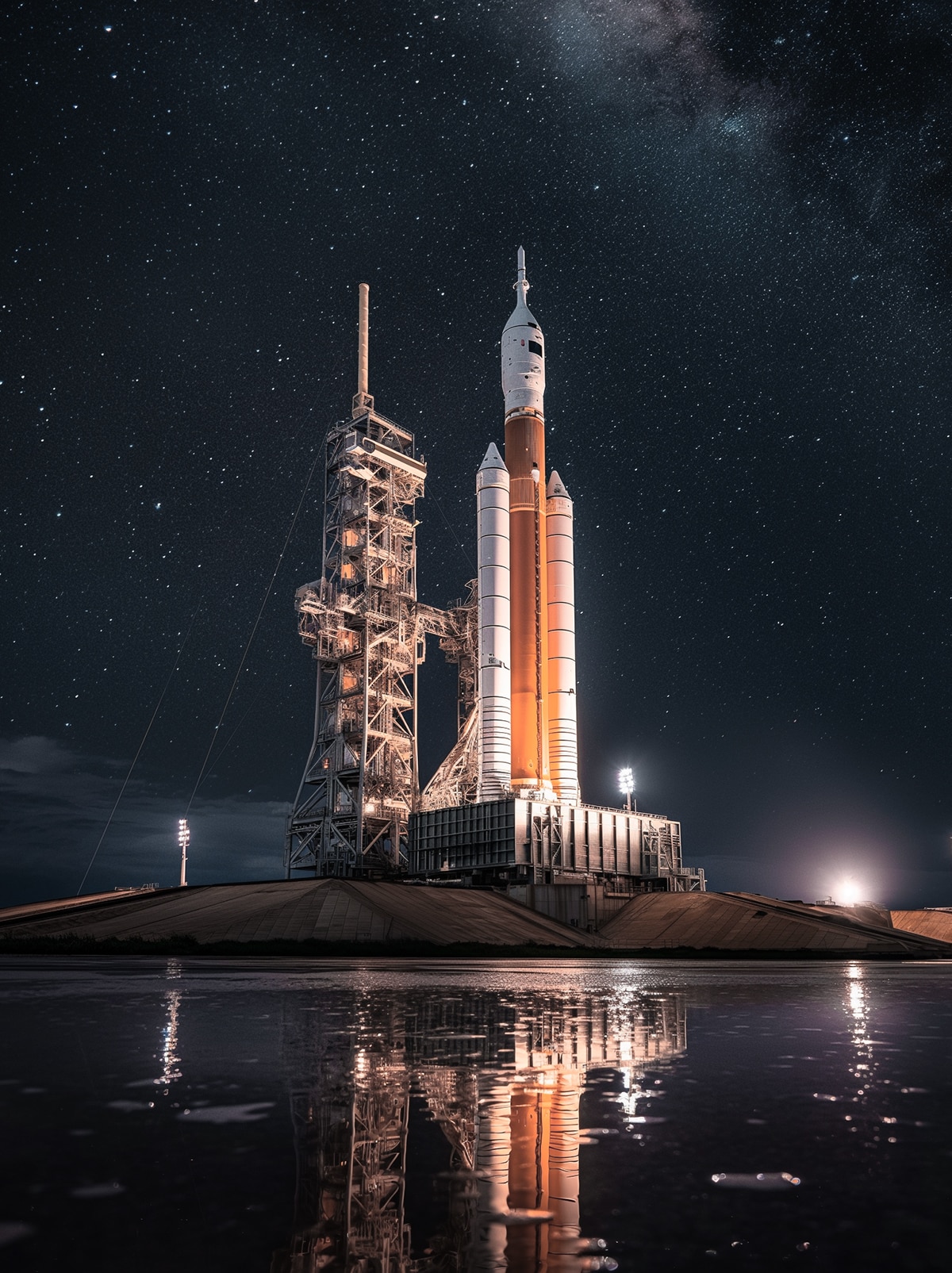
It all began in 2017 with the launch of NASA’s Artemis programme
The US space agency is targeting a specific area of the Moon – the South Pole – and has identified several objectives
PRIMARY OBJECTIVES
89.67°S
129.78°E
WHY THE SOUTH POLE?
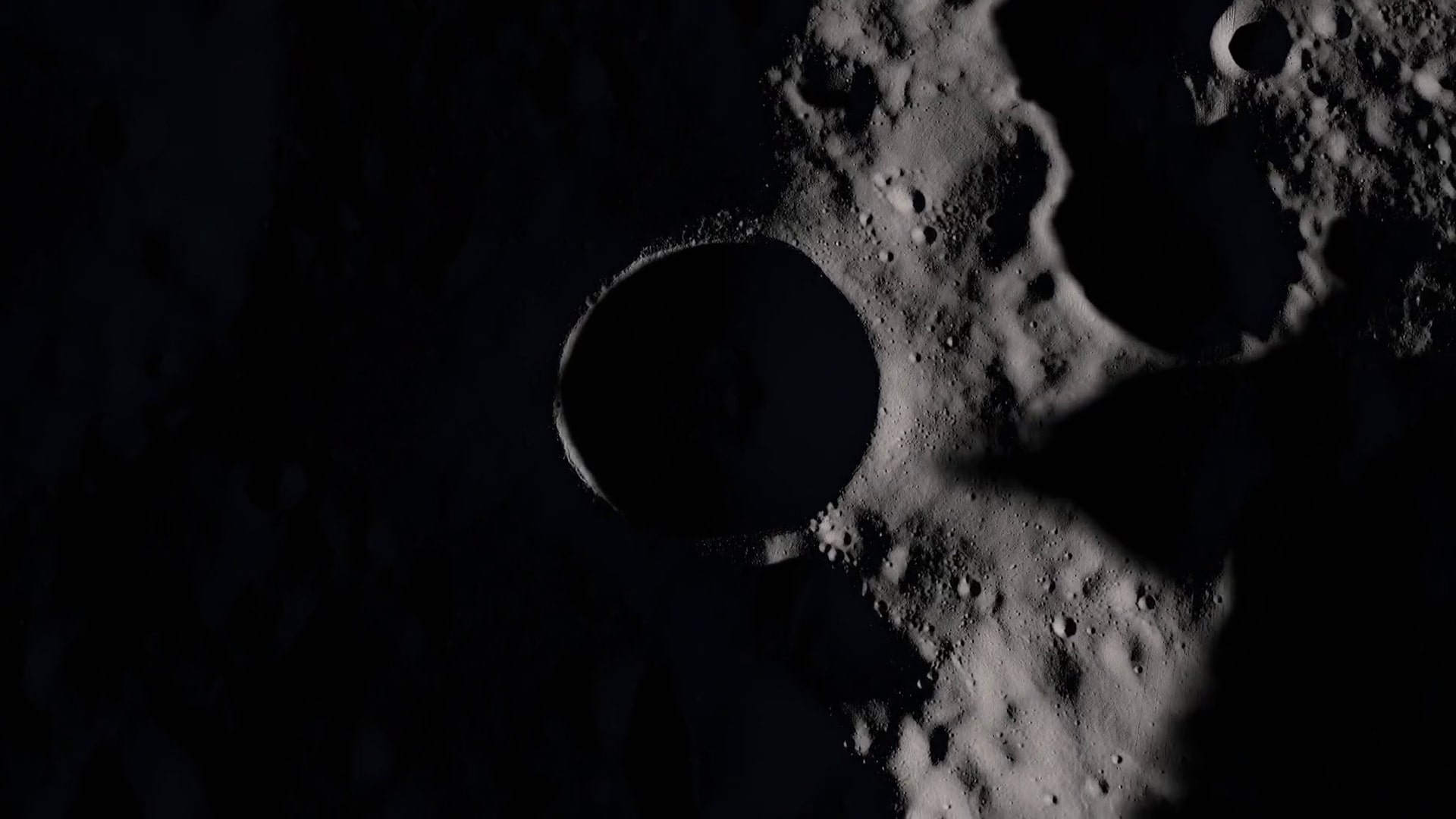
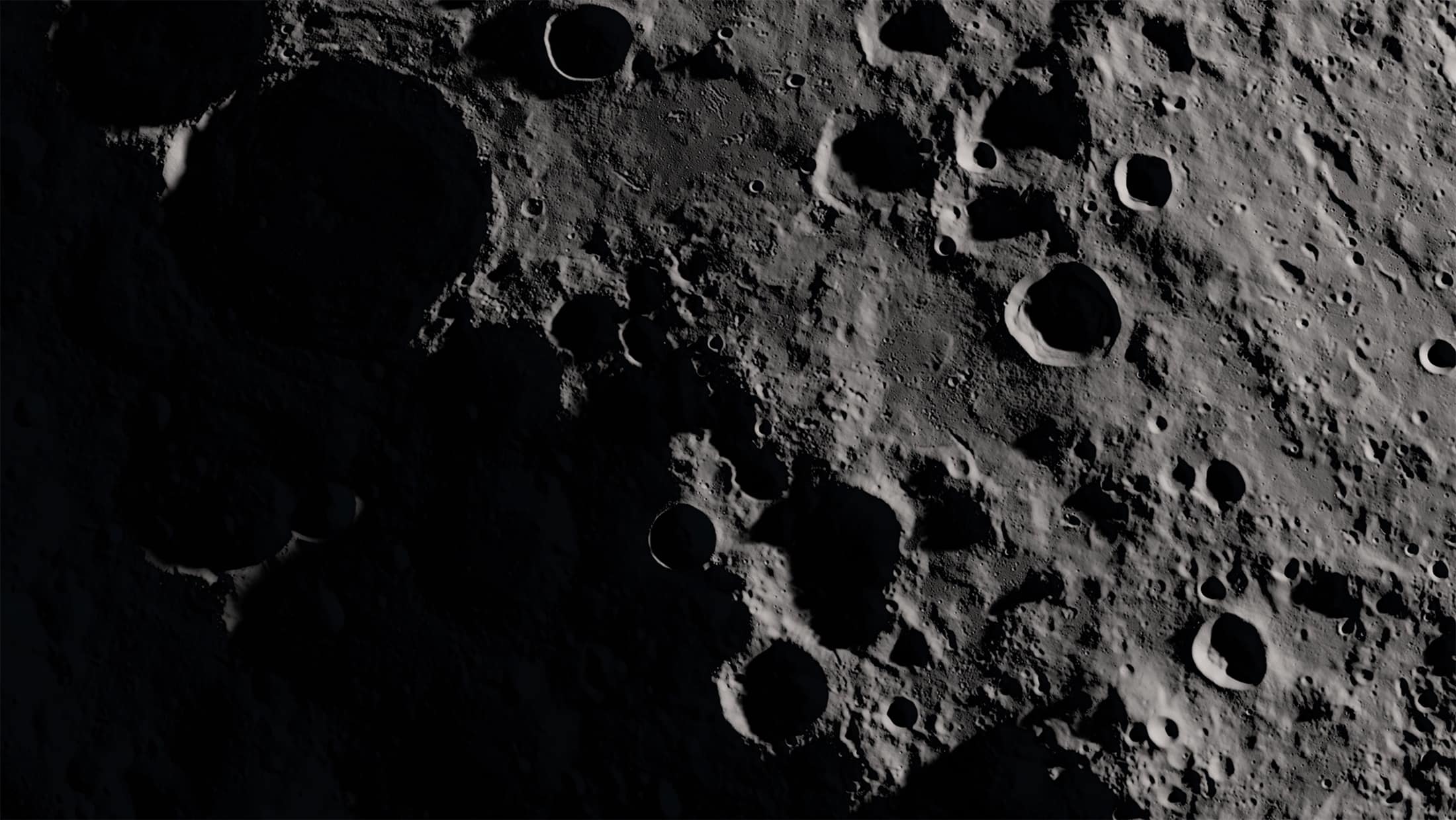
The Moon’s low axial tilt keeps the Sun very low on the horizon. Some elevated areas therefore enjoy long periods of sunlight, favourable for power generation, while craters permanently in shadow may preserve water ice and other volatiles.
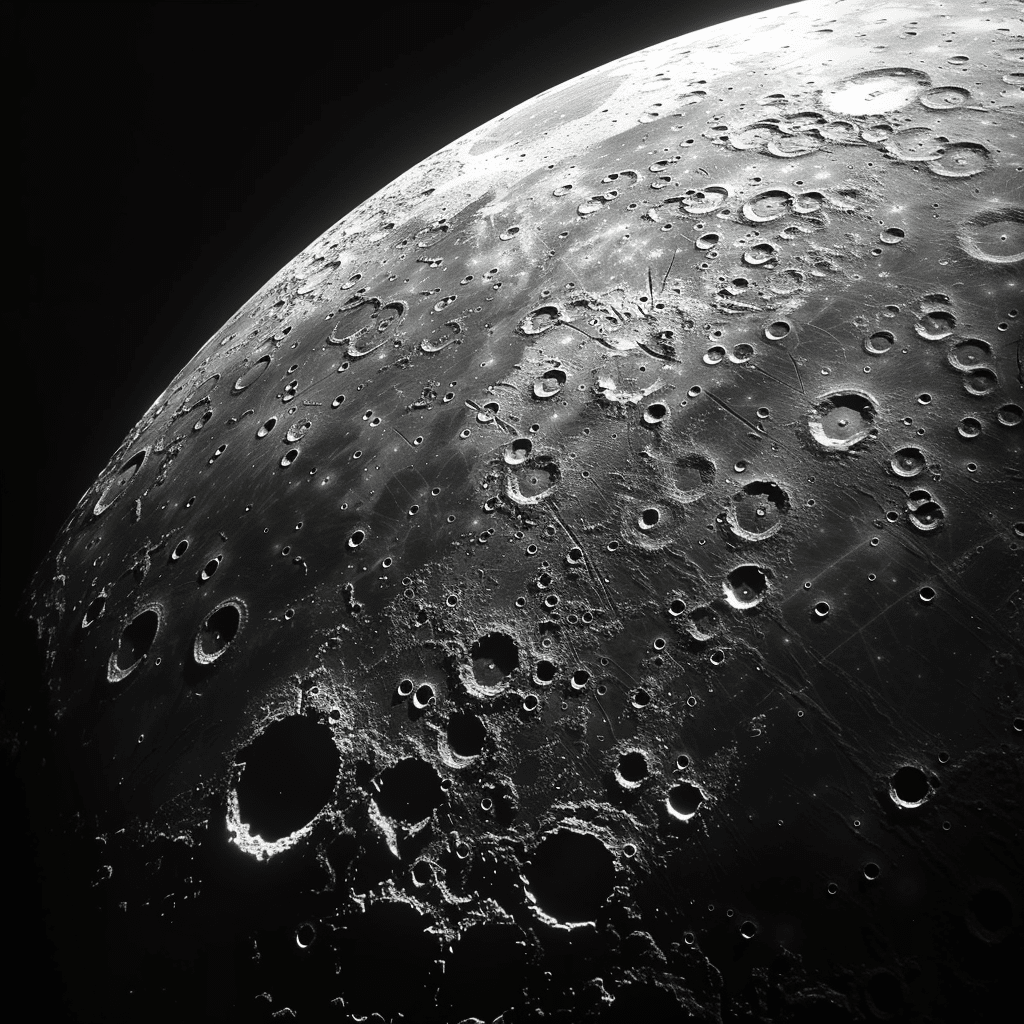
The lunar South Pole lies on the rim of Shackleton crater, named after the British explorer. Approximately 21 km in diameter and nearly 4.2 km deep, the crater exemplifies the region’s key characteristics. Selecting a site requires balancing access to power, visibility from Earth, terrain conditions and landing safety.
Some elevated sites at the lunar South Pole enjoy long periods of sunlight, which could facilitate power generation and reduce reliance on stored energy.
Permanently shadowed regions are cold traps that may contain water ice, whose quantity, concentration and accessibility remain to be determined.
WATER AND SUNLIGHT: TWO RESOURCES FOR A SUSTAINABLE PRESENCE

The astronauts will use the water present to grow plants. It will also be used for cooling electronics and potentially producing hydrogen and oxygen by electrolysis to make fuel, or simply to generate energy with fuel cells.

Solar panels will use the sunlight to generate electricity, which will then be stored in batteries. The sunlight will also ensure optimum living conditions for the astronauts.
WHY IS A VEHICLE NEEDED?
Scientific sites, landing zones, habitats and infrastructure may be far apart. Mobility will allow astronauts and instruments to extend their operating range, transport payloads and reach areas that are difficult to access.
Vehicles will need to operate with a crew on board, be controlled from Earth or carry out certain operations autonomously.
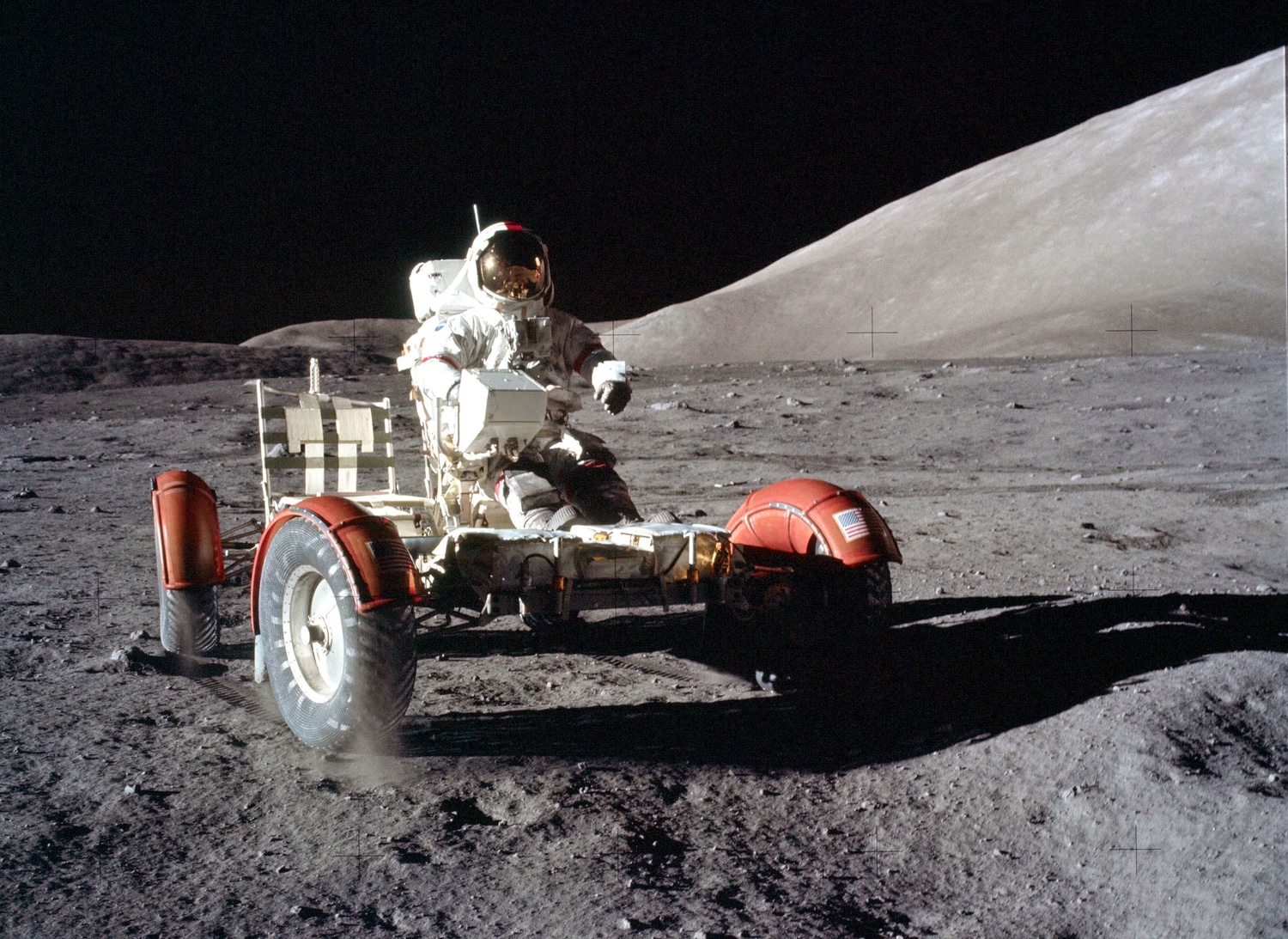
1971-1972
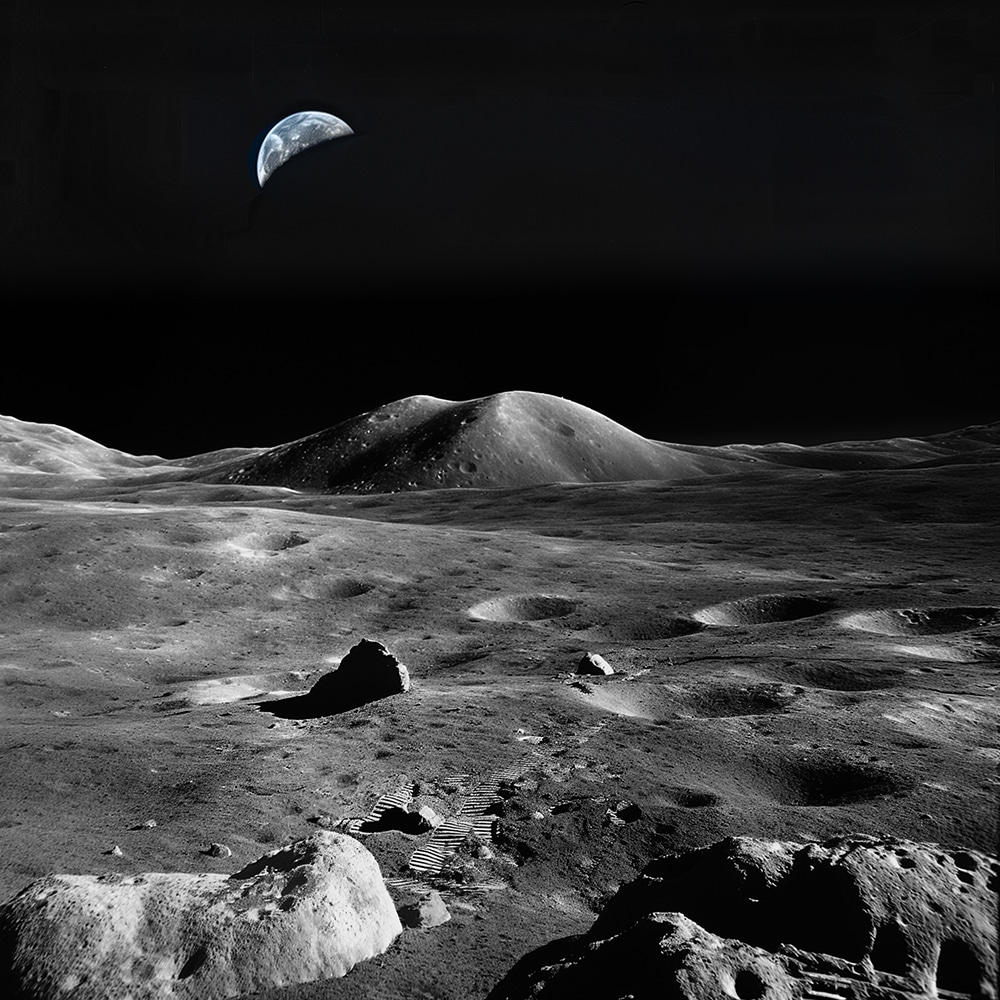
The LTV (Lunar Terrain Vehicle) enabled the Apollo 15, 16 and 17 astronauts to explore a larger area.
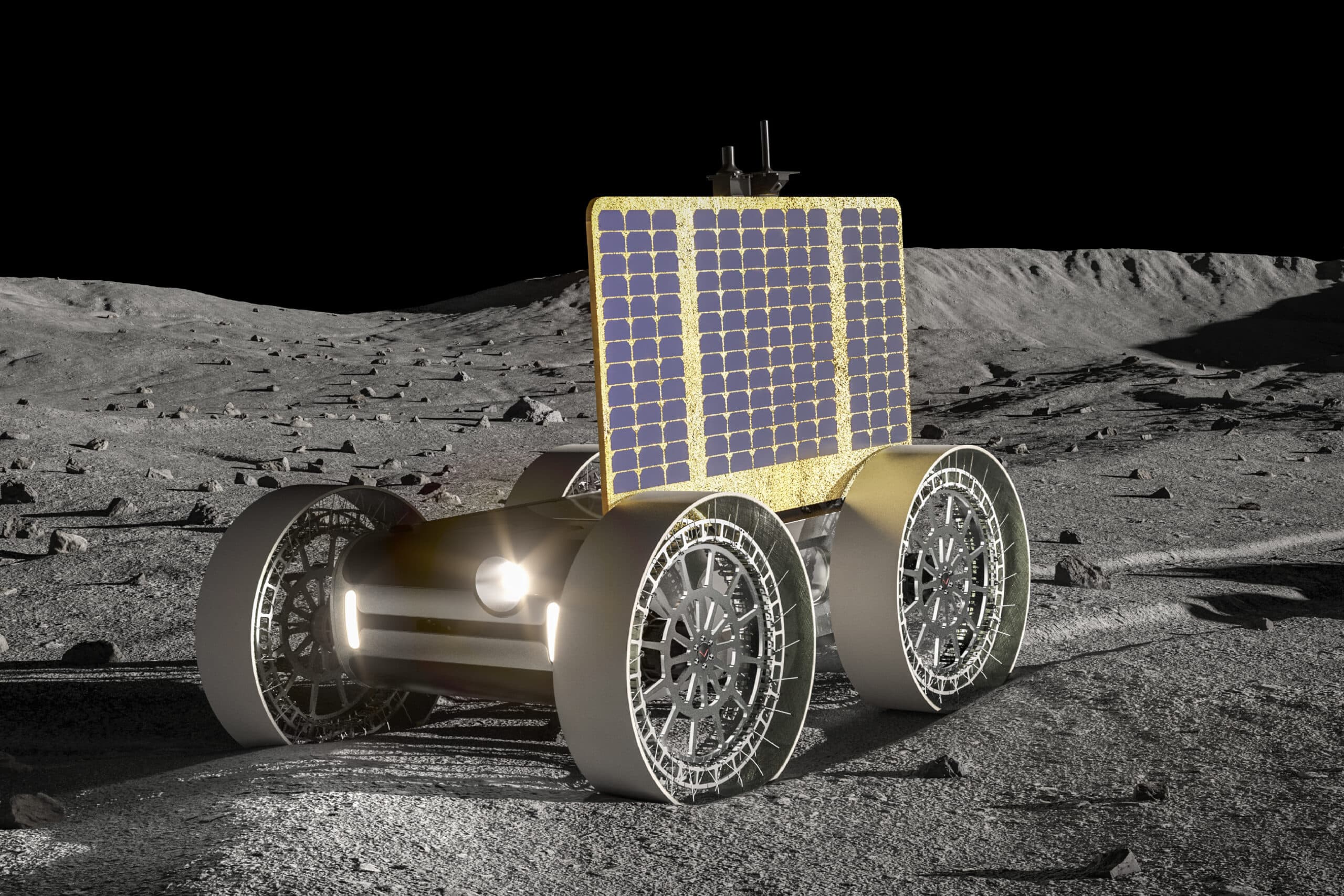
LATE 2026 | FLIP
FLIP is a rover designed by Venturi Astrolab to transport small payloads.
With a mass of approximately 500 kg, it can carry up to 30 kg of payloads and reach 20 km/h. Astrobotic’s Griffin-1 lander is due to deliver it to the Nobile region at the Moon’s South Pole.
FLIP will carry NASA instruments and commercial payloads. It will also provide the first lunar test of Venturi Space’s hyper-deformable wheels manufactured in Switzerland and its high-performance batteries designed and manufactured in Monaco.
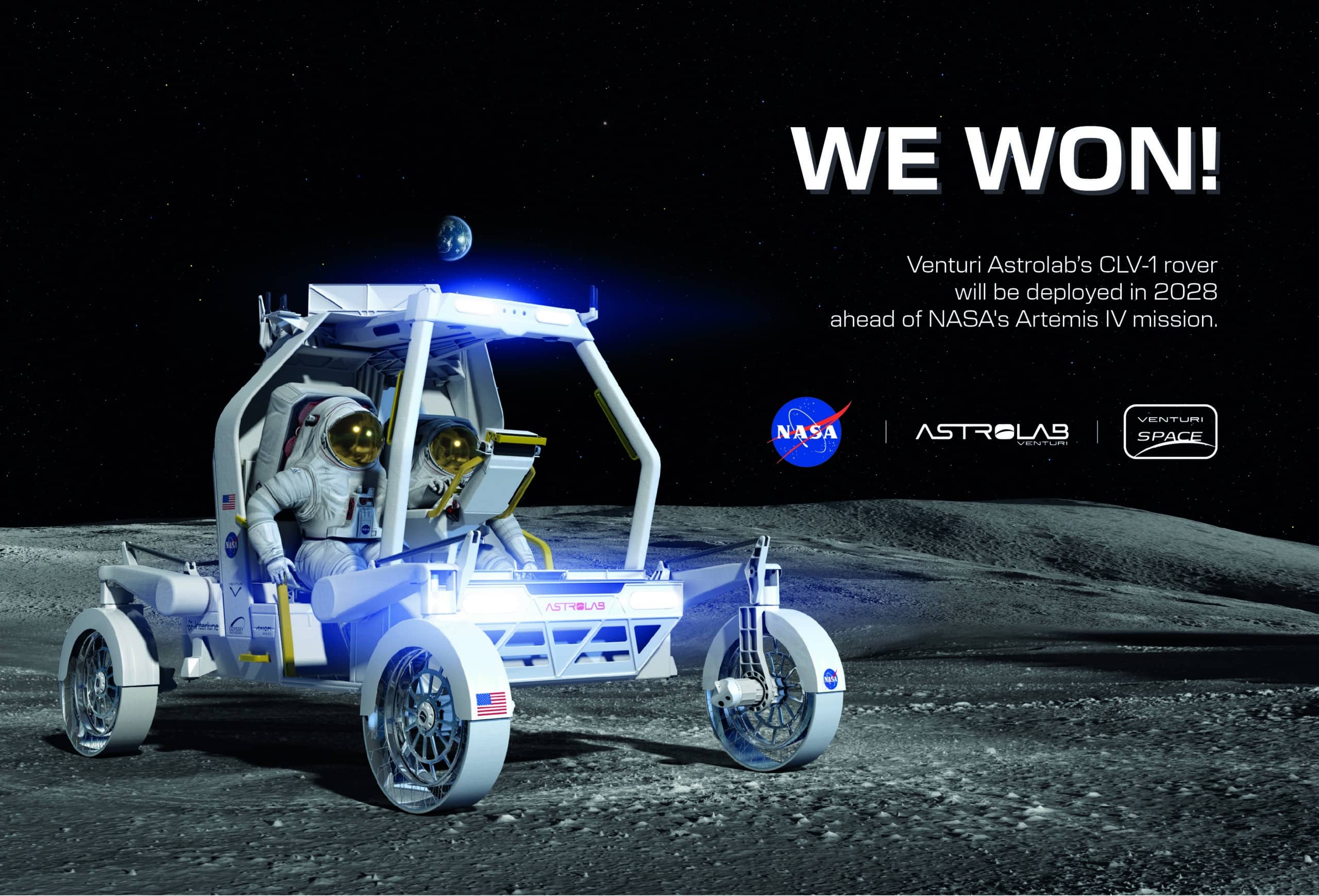
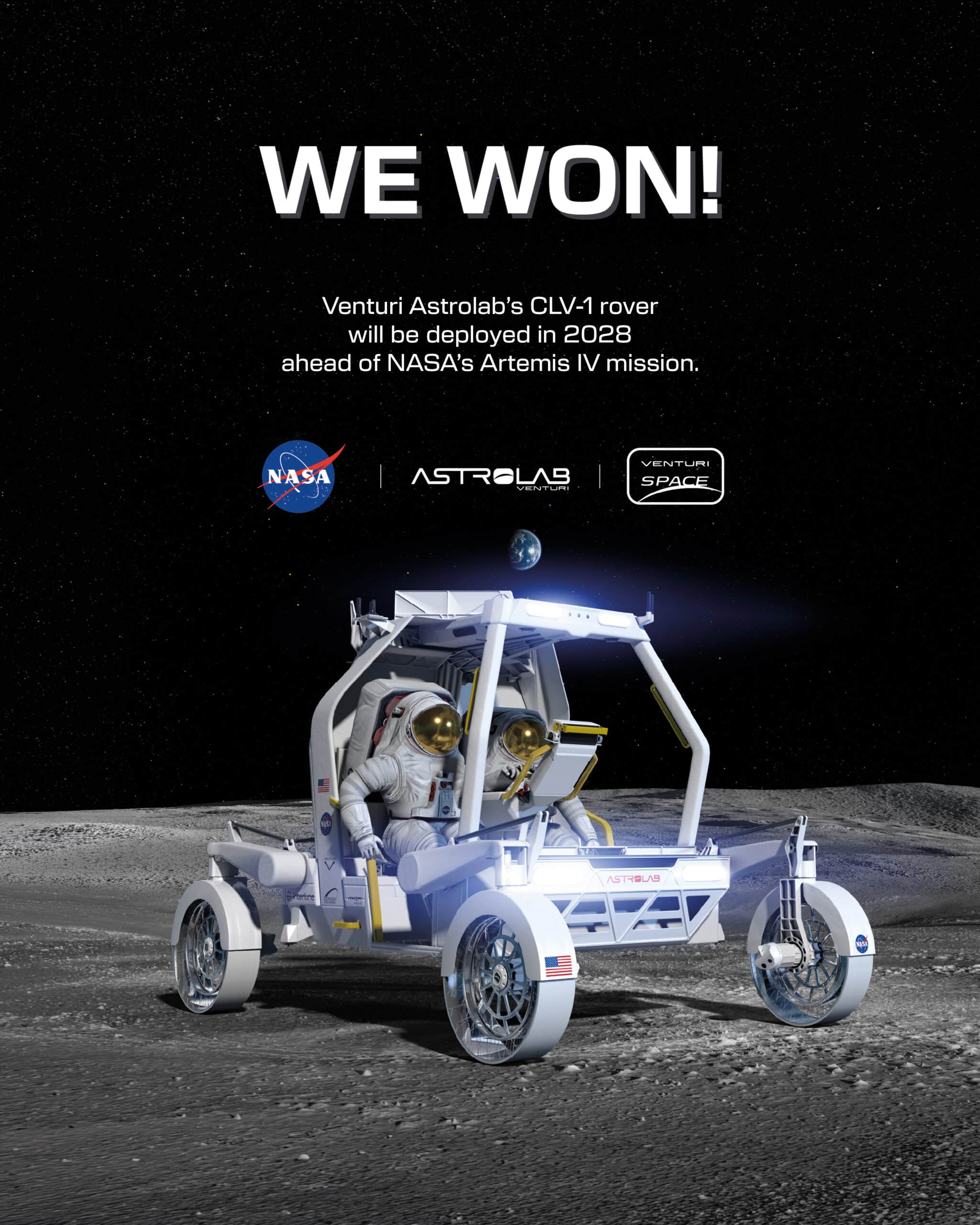
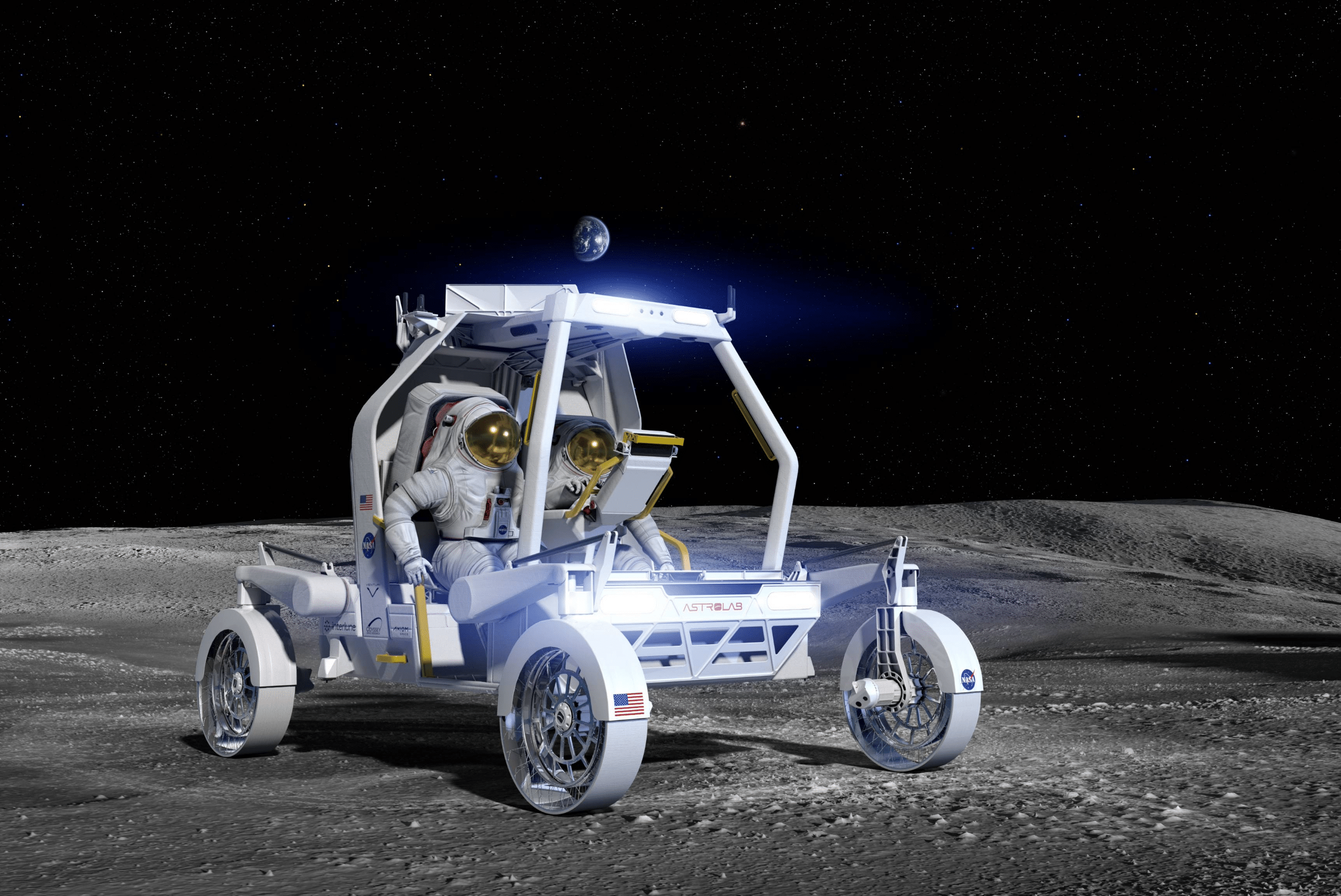
2028 | CLV-1
In line with NASA’s requirements, the rover CLV-1 is primarily designed to transport astronauts and their equipment. The rover can also perform certain surface operations remotely.
THE ARTEMIS MISSION LTVS WILL BE HIGHLY USEFUL
For covering the distance between the potential lunar landing areas and the Shackleton crater, ranging from 25 to 250 kilometres. The vehicles will also be used for exploration missions, transporting payloads, and building infrastructures.
NASA announced that it has selected the US-based company Venturi Astrolab, Inc. (Astrolab) as one of two providers of a crewed lunar rover for the Artemis campaign, advancing the agency’s plans to establish sustained surface mobility at the lunar South Pole. The new vehicle, known as the Crewed Lunar Vehicle, or CLV-1, will rely on critical technologies designed and manufactured by Venturi Space.
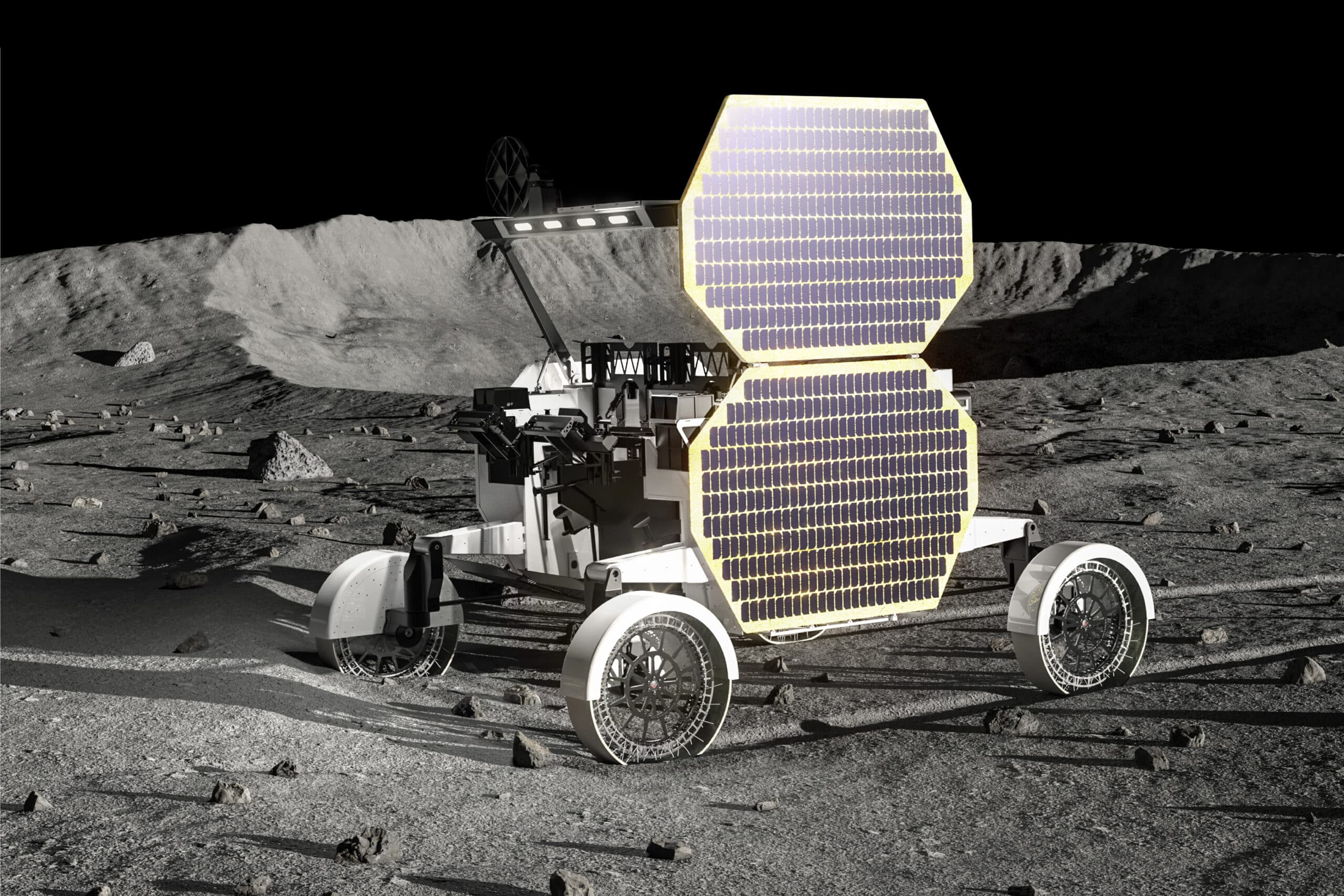
BEYOND 2028 | LUNAR FLEX
FLEX is a versatile rover designed by Venturi Astrolab. Its modular architecture and robotic arm are intended to enable it to transport, handle and deploy payloads.
Controlled from Earth and semi-autonomous, FLEX is intended for scientific and logistics missions, as well as the construction of future lunar infrastructure. It remains part of Venturi Astrolab’s roadmap beyond 2028, although no deployment date has yet been announced.
AROUND 2030 | TWO EUROPEAN VEHICLES
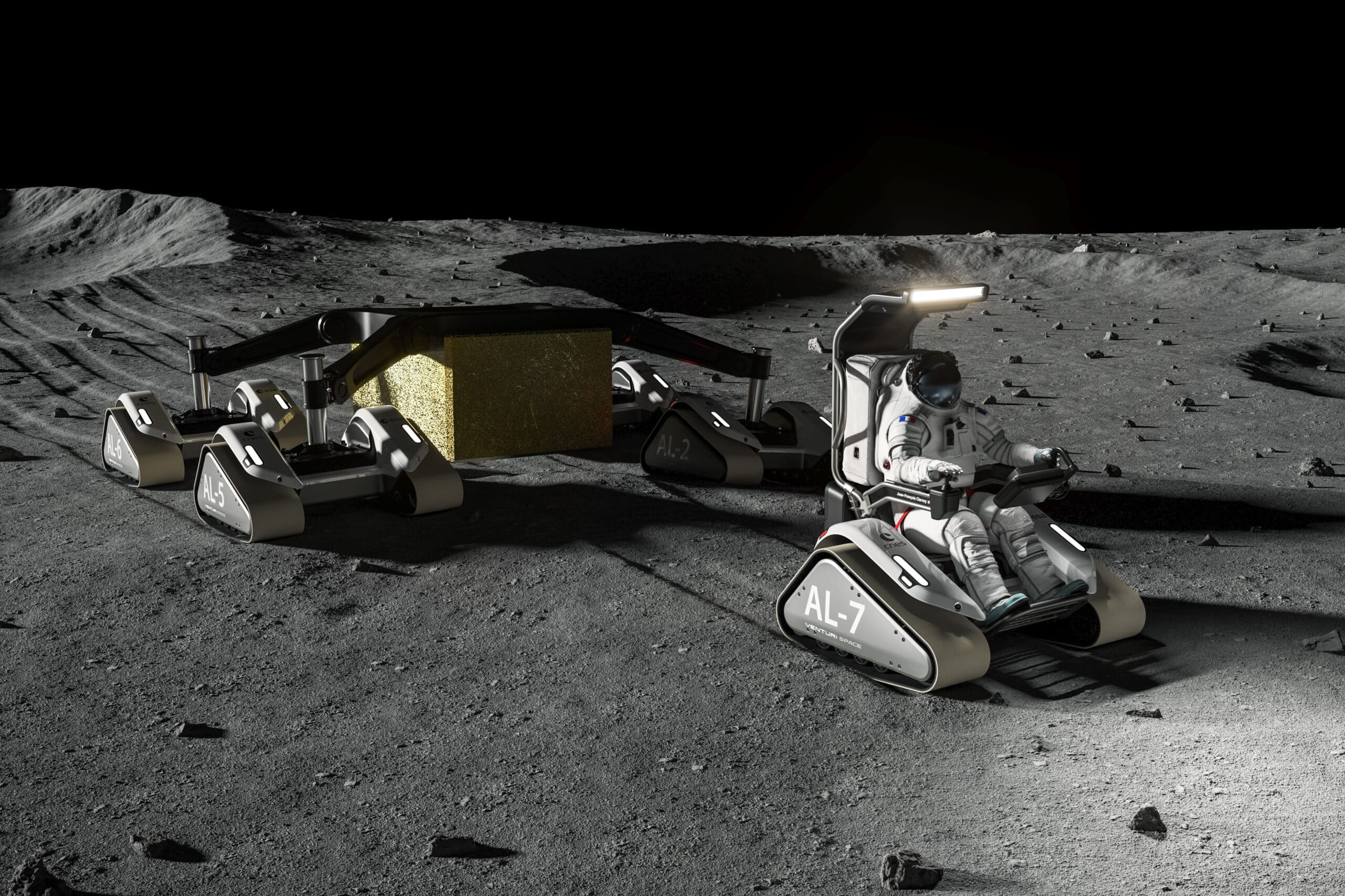
Venturi Space is developing two 100% European vehicles designed for the lunar South Pole.
ALTA LUNA is a compact tracked utility rover designed for local operations around future bases. It will be able to operate with an astronaut on board or autonomously. Its target mass is 300 kg and its target speed is 15 km/h.
MONA LUNA is an exploration rover with four-wheel drive and four-wheel steering, a passive suspension system and a robotic arm. It can carry up to 200 kg of payloads, reach 20 km/h and climb slopes of up to 33°. It could be sent to the lunar South Pole around 2030.
WHAT CHALLENGES DOES THE LUNAR SOUTH POLE POSE?