ABOUT VENTURI SPACE
Lunar and Martian mobility by Venturi Space, when excellence is a necessity.
Since 2021
 An image of a space view to our planet earth from moon
VENTURI SPACE TODAY
Since 2021, Venturi Space has been developing mobility solutions for the Moon and Mars.
A strategic partner of the North American company Venturi Astrolab, it develops and manufactures critical technologies: hyper-deformable wheels, high-performance batteries and battery management systems.
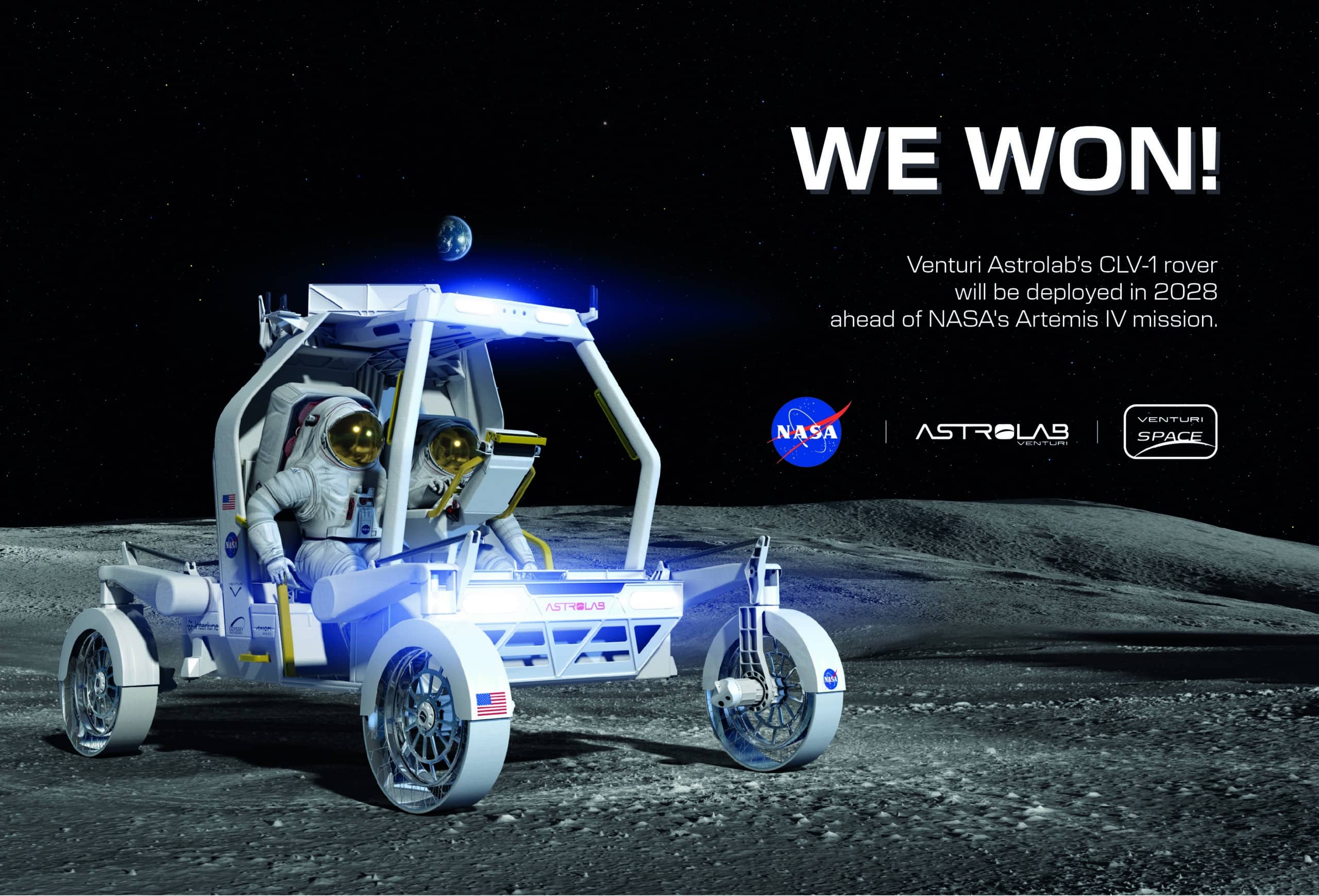
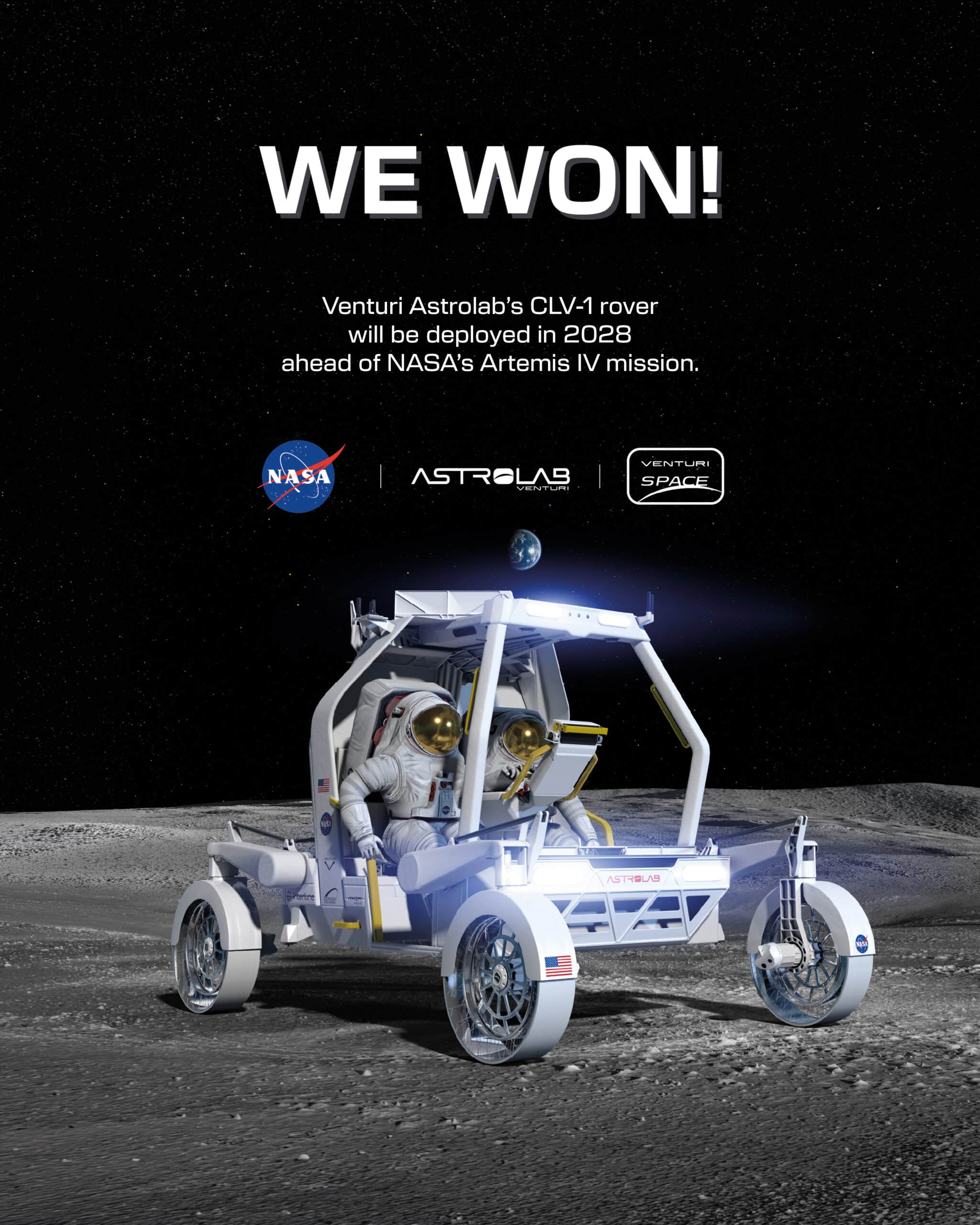
As a result of this collaboration, the FLIP rover will be deployed on the Moon in the second half of 2026, followed in 2028 by the crewed CLV-1 rover as part of NASA’s Artemis IV mission.
At the same time, Venturi Space is developing its own 100% European vehicles: ALTA LUNA, a compact utility rover designed to operate around future lunar bases, and MONA LUNA, which could be sent to the lunar South Pole around 2030.
2021

POWERED
BY INNOVATION
After two decades of innovation in high-performance electric vehicles, Gildo Pastor, President of Venturi, takes the Group into the space industry.
Venturi Space is created with one ambition: to apply its technological expertise to mobility solutions capable of operating in the extreme environments of the Moon and Mars.
The company develops alongside NASA’s programmes and European ambitions led in particular by the European Space Agency.
2025
MONA LUNA,
A EUROPEAN LUNAR ROVER
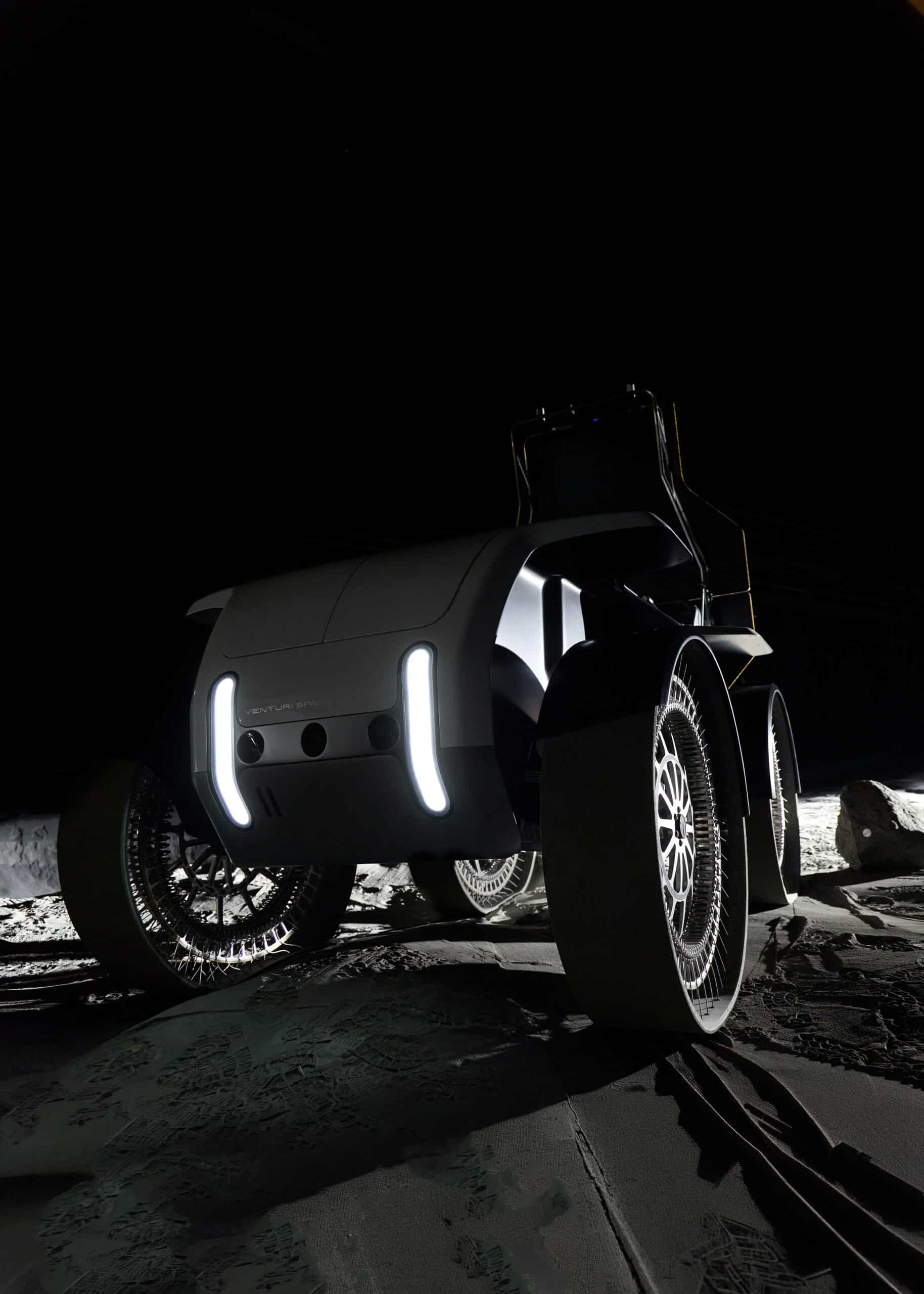
In June 2025, Venturi Space unveils MONA LUNA at the Paris Air Show. Designed and manufactured by Venturi Space, this exploration rover brings together technologies developed across the company’s three European hubs.
In November 2025, MONA LUNA completes its first driving tests at the European Space Agency’s LUNA centre in Cologne. These tests assess its performance on loose soil, slopes and obstacles representative of the lunar environment.
2028
A DECISIVE YEAR
Since 1 January 2026, under a contract awarded by the European Space Agency, Venturi Space has been conducting a risk-reduction study focusing on technologies for future lunar rovers.
In April, MONA LUNA undergoes egress tests using a mock-up of the European Argonaut lander, as well as further mobility tests.
On 26 May, NASA selects Venturi Astrolab as one of two providers of vehicles for Artemis astronauts under a $219 million contract. The proposed vehicle, CLV-1, will be equipped with three Venturi Space technologies: hyper-deformable wheels developed and manufactured in Switzerland, high-performance batteries designed and manufactured in Monaco, and a battery management system developed in Toulouse.
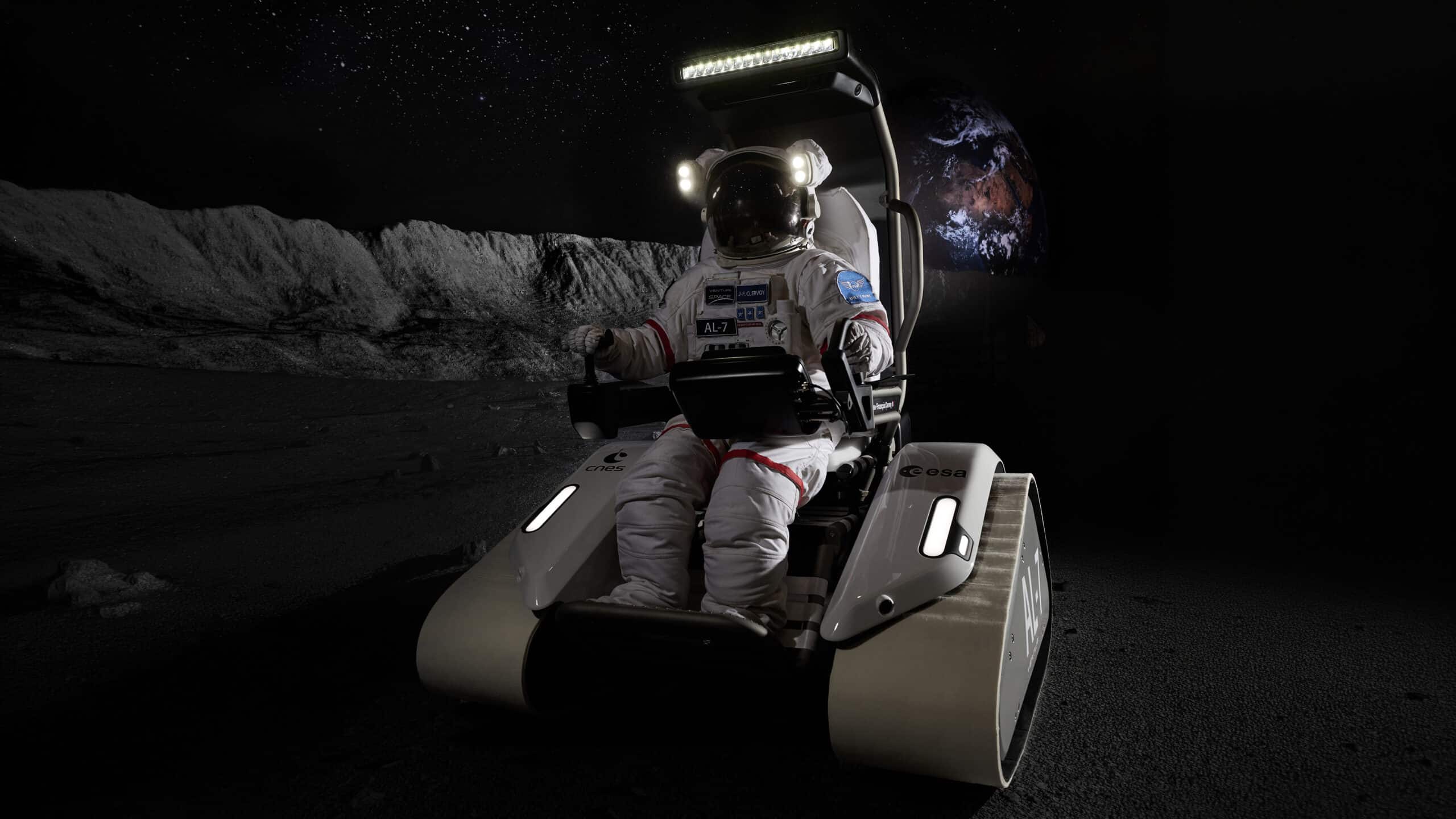
In September, Venturi Space unveils ALTA LUNA in Paris at the International Space Summit. Compact and tracked, this utility rover is designed for local operations around future lunar bases. It can be driven by an astronaut or operate autonomously.
Late 2026
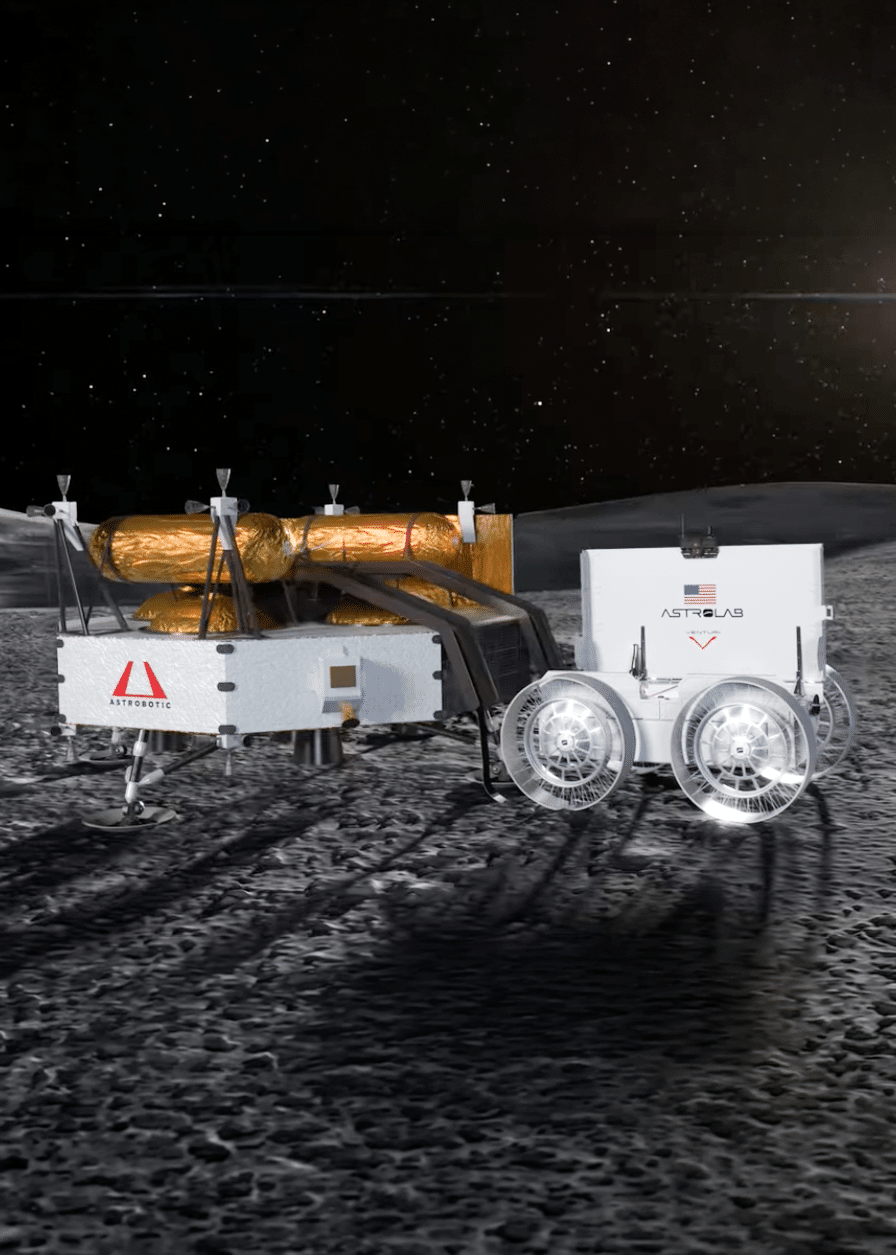
FLIP, A FIRST FOR VENTURI SPACE ON THE MOON
Designed by Venturi Astrolab, FLIP is a rover intended to carry small payloads.
It is scheduled to launch in late 2026 aboard a SpaceX Falcon Heavy. Astrobotic’s Griffin-1 lander will deliver it to the Nobile region at the lunar South Pole.
Operable from Earth and capable of certain autonomous operations, FLIP will carry NASA instruments and commercial payloads. It will enable the first lunar test of the hyper-deformable wheels developed and manufactured in Switzerland and the high-performance batteries designed and manufactured in Monaco.
2028

CLV-1, THE VEHICLE FOR ARTEMIS ASTRONAUTS
Directly derived from FLEX, CLV-1 is a crewed lunar vehicle designed by Venturi Astrolab.
It has a maximum mass of 950 kg and will be capable of reaching 10 km/h. Designed for Artemis astronauts, it will also be capable of carrying out certain operations remotely.
It is scheduled to arrive at the lunar South Pole in 2028 as part of the Artemis IV mission.
2028 and beyond
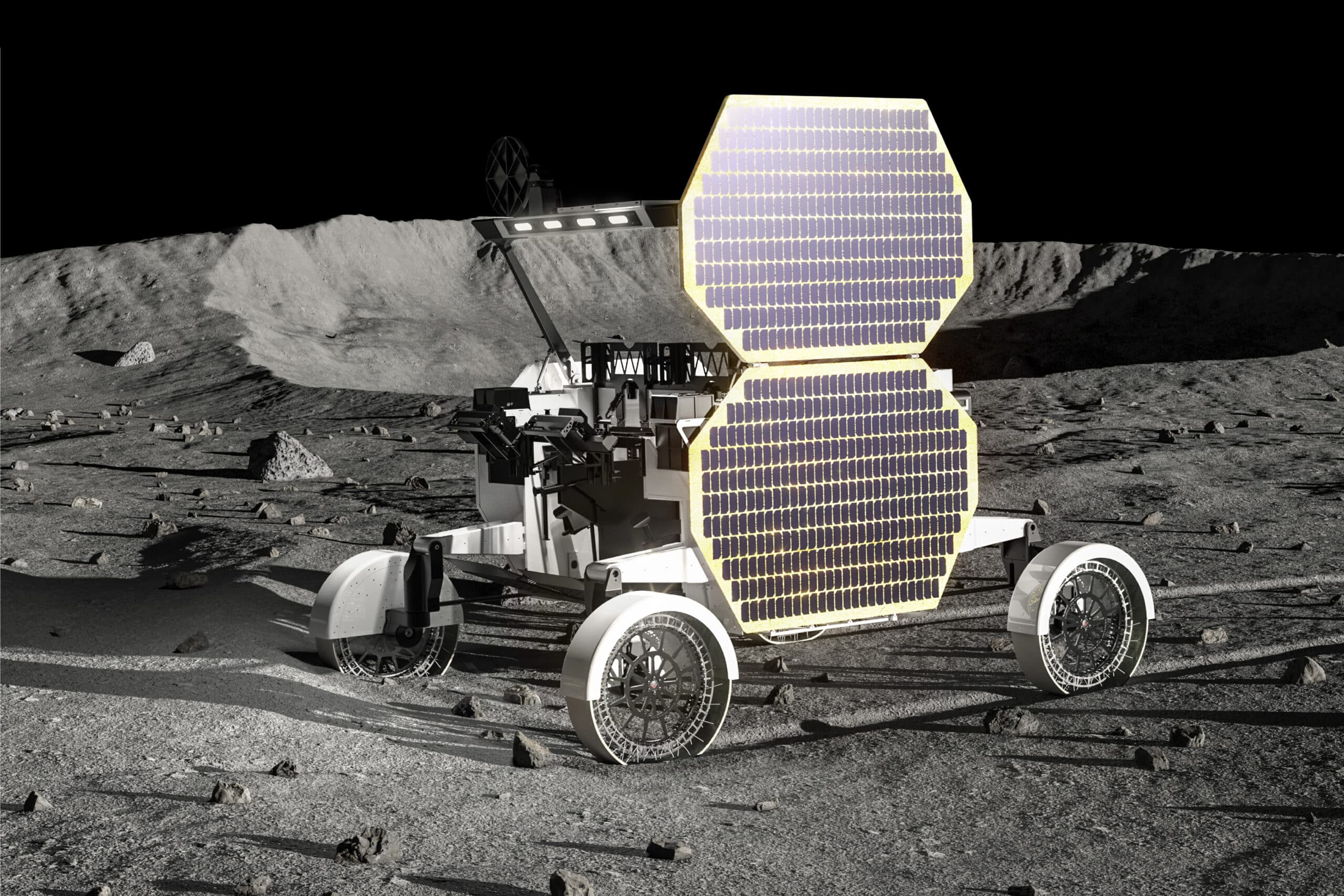
FLEX, FROM THE MOON TO MARS
FLEX is a multi-purpose rover designed by Venturi Astrolab. Thanks to its modular architecture and robotic arm, it will be able to transport, handle and deploy payloads. Its architecture provided the basis for the development of CLV-1.
FLEX features in Venturi Astrolab’s roadmap beyond 2028. A Martian version has also been envisioned for scientific and logistics missions conducted by organisations from the public and private sectors.
MARTIAN FLEX would feature an integrated drilling and prospecting system designed to locate and extract subsurface water.
AROUND 2030
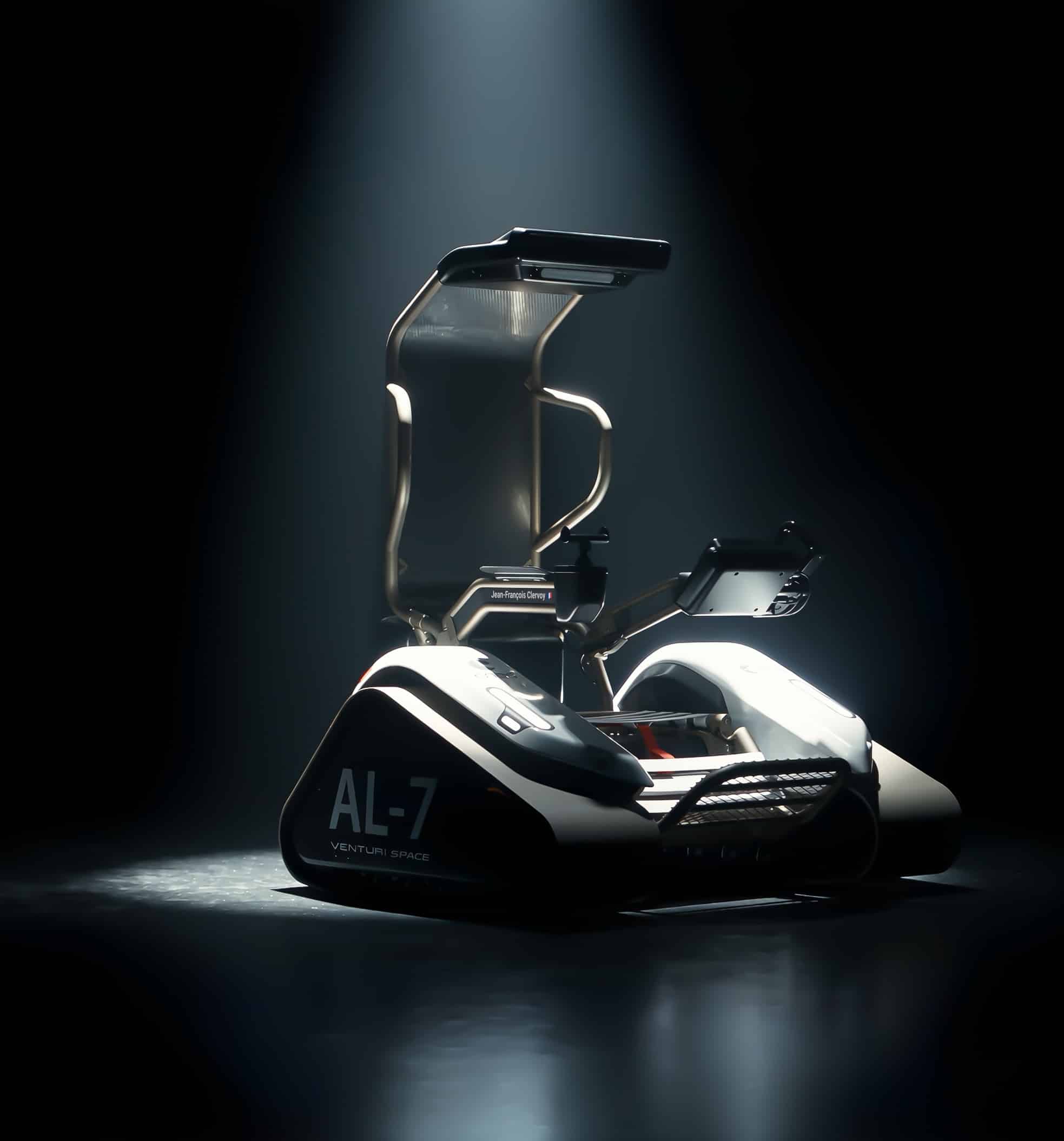
TOWARDS EUROPEAN LUNAR MOBILITY
Europe’s autonomy in lunar mobility is a strategic priority. Venturi Space is developing two complementary vehicles designed to meet the future needs of ESA and European national space agencies.
ALTA LUNA is a compact utility rover designed for local travel and for handling and transporting payloads near habitats and infrastructure.
MONA LUNA is an exploration rover capable of carrying up to 200 kg of payload, climbing slopes of up to 33° and surviving multiple lunar nights. It could be sent to the lunar South Pole around 2030.
Both vehicles use the same battery and battery management technologies as CLV-1, the Venturi Astrolab rover selected by NASA. MONA LUNA also uses the same hyper-deformable wheel technology.